

Hi there,
AI change often fails because of people, not technology.
The real question is whether your team buys in or pushes back.
The people side of AI change matters because too many companies are treating it like a technology project, not a massive cultural change problem.
It requires big changes in behaviour and how things are done around here.
Most companies have started some level of AI experimentation. Many have rolled out AI licences or let their engineers use coding tools like Claude Code, Cursor, Devin, and Codex.
Some have launched more expensive and ambitious endeavours, including full AI transformation.
But increasingly, the media share stories of companies concerned about rising costs and an inability to isolate what the return on that spend actually is.
New here? Read these articles:
I tested AI for 18 months. Here is what actually works.

I know you want to get more out of AI in your business, and in this newsletter, I’m going to explain why AI can do more, you just have to let go.
Why your failed AI rollout is what you need

Learning from a failed project is one of the best lessons you can experience.
Translation is the hard part
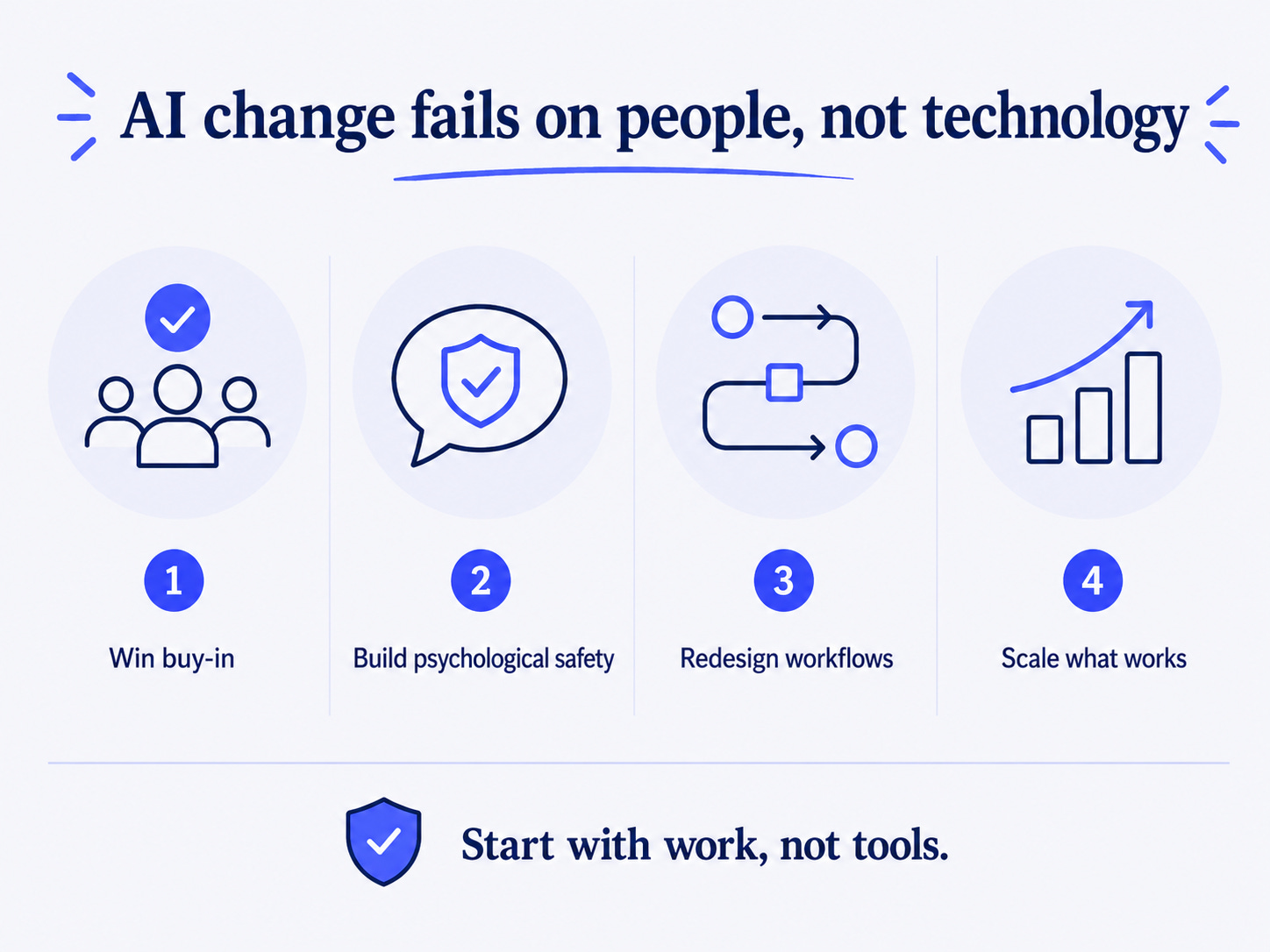
People understand the seriousness of AI and the need to act. Translating that into tangible business outcomes is where it breaks. You need to get things done better, faster, and cheaper within your operating model.
To achieve these benefits, you need to change how work gets done. This means changing decision points, workflows, and the incentives team members have.
It requires shifting the quality guardrails that must be obeyed, as well as the different handoff points between your teams and the customers or regulators who consume your work product.
There are many hidden failures. A company might spend money on licences, or even a fortune on AI API usage, without doing the mapping to link that spend to tangible, real outcomes.
The change fails because people still don’t trust AI. They haven’t actually changed how they work, or they use it in a purely cosmetic way. Often this is just to hit the top of a token-maxing dashboard because that was the best idea management could come up with to track AI usage.
What people opportunities are you thinking about with AI in your business?
DM me on Substack with your answer.
Winners learn from mistakes
PS: I’m running a limited offer until midnight 1 July 2026. Upgrade your Getting AI To Work subscription to an annual paid one and you’ll lock in a 30% discount today and keep that 30% for the life of your subscription. Lock in your exclusive discount now to get access to all paid articles.
The leaders in this space are rethinking their entire people, process, and platform strategies. When I read about how the frontier labs use the tools they ship, it’s clear they are dogfooding, they use the product and they push what they do to the limit.
Anthropic uses Claude heavily. OpenAI uses ChatGPT heavily. The leverage gained from using AI effectively is significant.
When I read about companies struggling to show a tangible return on investment, most of these companies haven't actually progressed past basic implementation.
Cultural barriers are holding back their teams’ ability to learn through trial and error. Even in risk-averse corporate environments, this requires making mistakes and learning from them.
Technical change can be simple. You get the licences, execute the enterprise deal, and pay the invoices. You have a dashboard showing that 100% of your employees have access to the latest AI tools.
People change is a lot messier. People will tell you to your face they love the initiative, work hard, and even ship projects that deliver. But deep down they think it's yet another harebrained management idea.
