

Hi there,
If you’re interested in AI, it’s important to remember that most people on the planet don’t care about it. They actively hate it. The people who do care are about to learn the next lesson, and it isn’t a technology lesson.
Last year I wrote a number of pieces on this newsletter about lessons from economics, the theory of the firm, and how they might apply in the AI era. One of those was on operating model compression. The thinking at the time was that a lot of companies would realise the human coordination cost could be replaced through AI agents making better, more efficient decisions.
How is that turning out so far? It turns out many barriers to getting results from AI have nothing to do with the technology itself. It is all about the people and culture within the organisation trying to roll out an AI transformation. Many processes, controls, and ways of doing things that worked well in the pre-AI era are anti-patterns or obstacles in the moment we now find ourselves in. This means a proportion of AI projects are essentially doomed from inception.
Take Uber.
In April 2026, Uber’s Chief Technology Officer Praveen Neppalli Naga said publicly that the company had exhausted its entire 2026 AI usage budget. Not because of GPUs, hiring, or new data centres. Almost entirely because of inference costs on AI coding tools, mainly Anthropic’s Claude Code and Cursor.
Uber gave around 5,000 engineers access to these tools in December 2025. By March, 95% of engineers were using them monthly. 70% of committed code was AI-generated. 84% were using agentic features. Per-engineer monthly costs ran from $500 to $2,000 in API tokens alone. The CTO described the situation as being “back to the drawing board” on AI spending plans. Nvidia executives have made parallel comments about teams where compute costs now exceed employee salaries. Uber became the poster child because it was honest about it, but it is not alone.
Forget the overspend. The point is what it proves. When the tools are useful, the consumption curve does not match any planning artefact you have. The bill is large because the savings are larger. The budget was the visible symptom. The org chart was the actual problem.
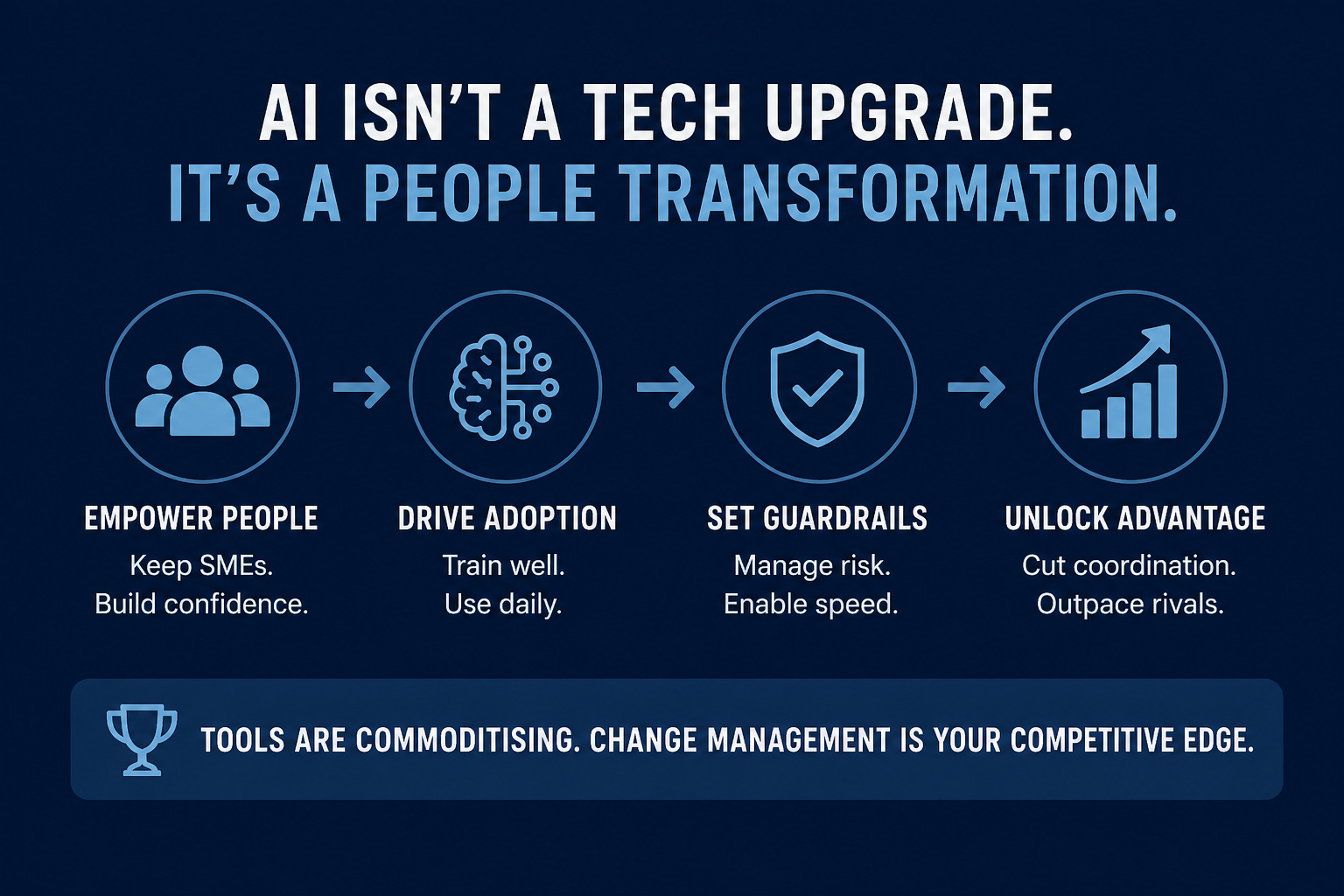
Why? When you think about what a business is and why a business exists, it exists because it is better to put together a bundled operating model of people, process, and platforms in one firm than to contract for every single output. The bundle is worth more than the sum of its parts because of coordination overhead. That overhead is the variable AI eats.