

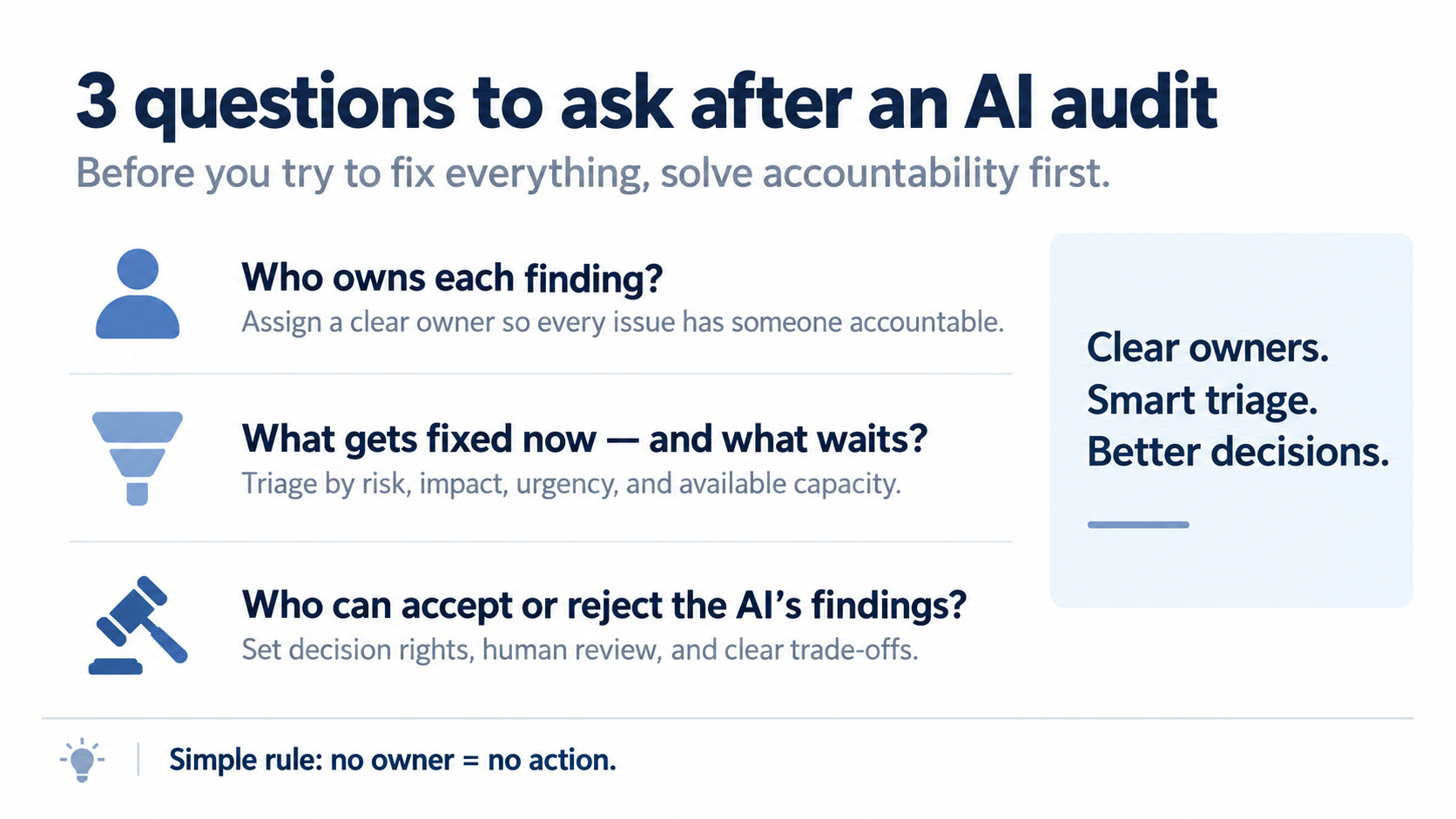
So after you start looking into your business with the help of AI, you get a nice list of problems. Most business owners assume their next problem is fixing everything. Before we get to that, you first need to solve accountability. Who will own and be accountable for every single finding?
Before ChatGPT came on the scene and we started getting better AI models, an audit finding or consultant report was infrequent and expensive. I handled a number of these engagements in my corporate career.
This isn’t an easy or fun process, and takes weeks or months to get an outcome that is commercially useful. Often you get your own ideas remixed and replayed back to you in exchange for a 6 or 7 figure invoice!
Quite often when you had these sorts of reports, you had to go off and do a lot of mapping work to turn a consultant finding into something workable inside that firm’s environment.
With an AI audit, every finding you don’t follow up on is going to keep coming back every time you run the next AI audit. If you do something like set up an AI agent to act as a monitor for a particular process, then until you fix it, it’s just going to keep alerting you.
This shows that a lot of people who use AI to find problems still aren’t thinking about using AI to help fix them.
This used to sound far-fetched to me, having worked in the corporate world for a long time, but this is what I think is the right mental model. We can’t plan and execute our AI transformations without understanding that AI can do far more than most people in the business world either appreciate yet or want to admit.
In the next section, I’ll talk about how to think about accountability for these findings and how the AI era shifts how we handle this process of exercising judgment around what we do and don’t choose to fix.
