

In today’s newsletter:
Muse Spark 1.1 and Grok 4.5 (not GPT 5.6)
Why more efficient models matter
How to take advantage of this trend
While much of the world is still talking about Anthropic’s released-blocked-released Fable model, or the excellent GPT 5.6, two other AI models were released this week that offer a lesson for our AI change agenda.
Grok 4.5, developed by SpaceXAI in collaboration with Cursor, and Meta’s Muse Spark 1.1 were released this week, showing that the AI race is far from over.
I’ve written extensively in this newsletter and spoken on my YouTube channel about how AI is now a people problem, not a technology problem.
This doesn’t mean I’m not heavily focused on the tech. In fact, one of the key skills of this new era is that we all have to become more technical.
This week’s AI news has arrived in such volume that I’m glad I never focused solely on repeating AI news, but instead on change strategies for AI transformation.
I’m starting to feel the benefits of having spent the time and effort pushing AI tools and models hard over the 18 months since I quit my corporate job.
The rate of progress, as I have directly experienced it, fuels my conviction that embracing AI and rethinking your operating model is one of the most important challenges many businesses face.
This is the real lesson of this week: we want to improve our businesses, and we are regularly getting new AI models that help us achieve that.
Muse Spark 1.1 and Grok 4.5 (not GPT 5.6)
Source: Meta
Over recent months, there have been a lot of complaints about single-vendor risk and the cost of tokens. Much of this is because enterprise spending is currently focused on Anthropic’s and OpenAI’s top models. We need situational awareness to protect our businesses and make sure our change programs are flexible enough to meet the moment.
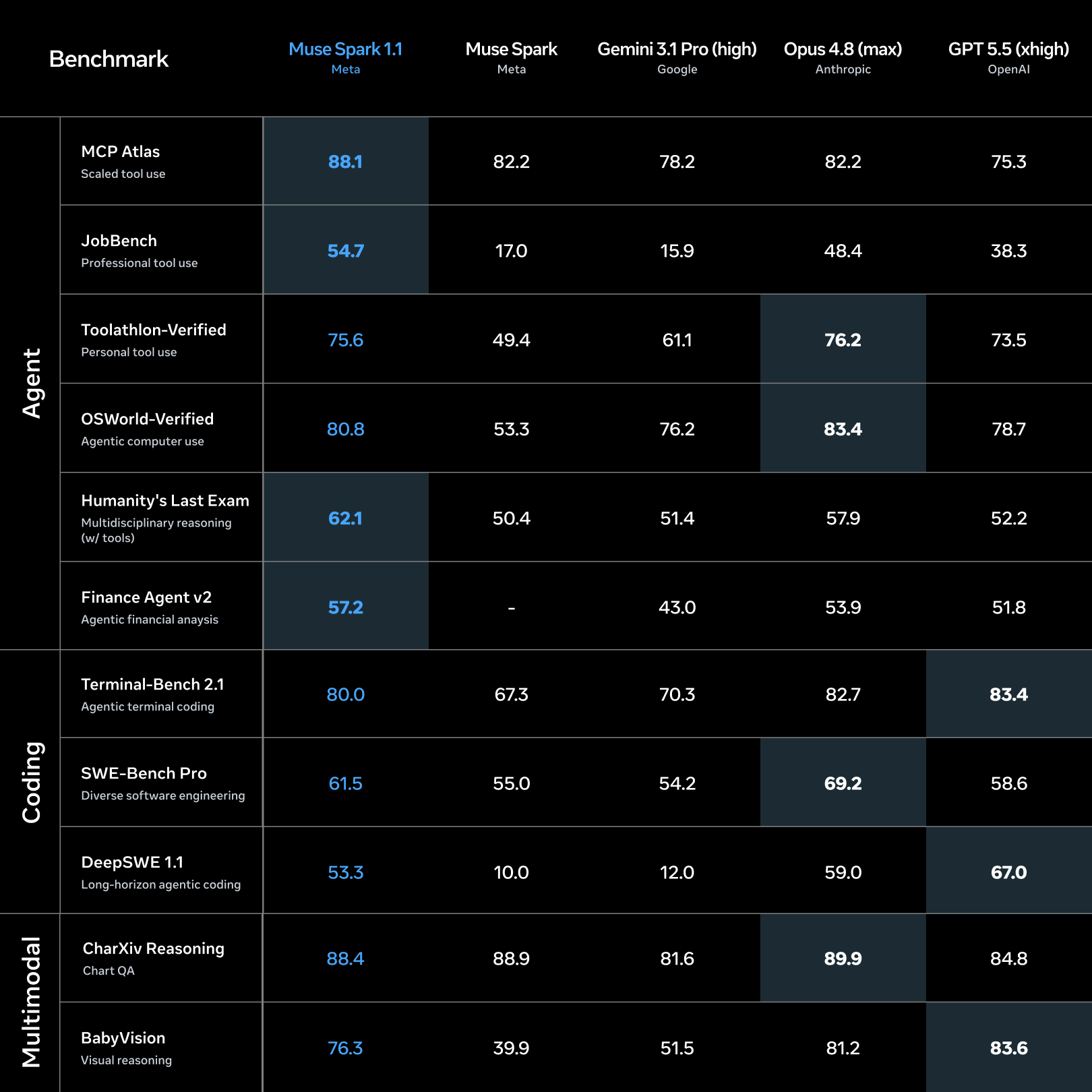
Muse Spark 1.1 represents a substantial lift in performance and is a credit to the Meta team. They had the compute, cut what wasn’t working, invested billions in new talent and have now shipped near-SOTA coding and agentic capabilities in Muse Spark 1.1, launched Muse Image and previewed Muse Video.
Meta has also launched its new Model API in public preview, introducing more price and quality competition for the leading labs and putting further pressure on Google DeepMind to get on with it and release Gemini 3.5 Pro.
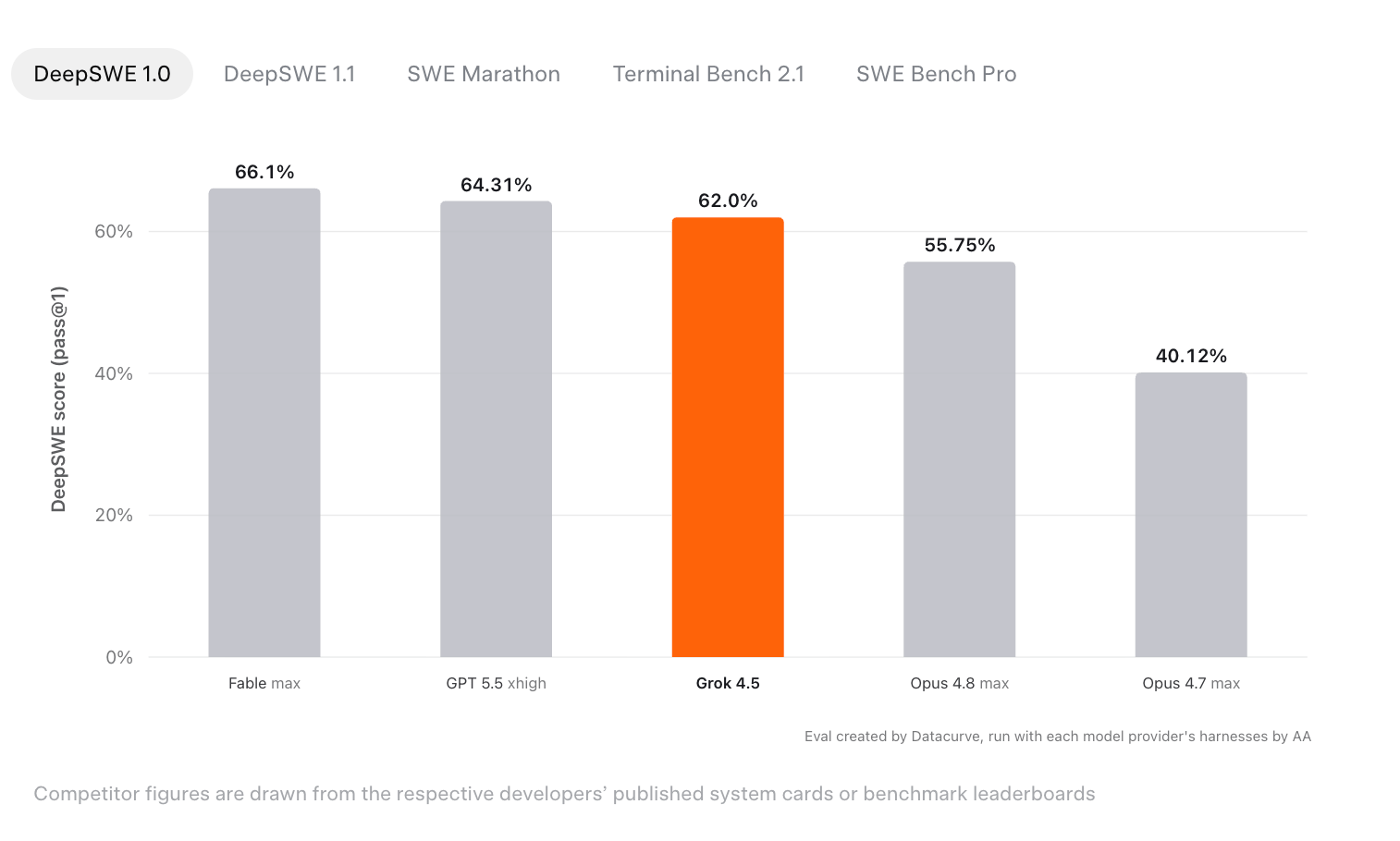
SpaceXAI was also able to pivot and put its compute to good use, with its massive resources and collaboration with Cursor lending a hand. The release of Grok 4.5 will take some time for enterprise buyers to appreciate, but it represents a substantial improvement in efficiency and productivity at a much more competitive price point.
This is good for businesses around the world because it means that, as the capabilities of AI models rise, more models at better price points are available to meet their needs and help diversify away from single-vendor risks.
In Australia, APRA has warned that boards need stronger AI literacy and better oversight of third-party dependencies. If greater model choice helps regulated entities reduce concentration risk while meeting their security, resilience and governance obligations, that’s a good thing.
Muse Spark 1.1 and Grok 4.5 are not Fable-level or Mythos-level models, but they are not that far behind GPT 5.6 and will improve over time. The key point I want my audience to consider is that getting an AI transformation right involves more than picking one vendor or selecting a specific model version.
It’s about building a culture of trial and error that helps you learn from mistakes and discover what works in your business when taking AI use cases from idea to production.
Source: SpaceXAI
